Free to download

Sample data

Updated

Real Seestar captures, 6 h 27 m in all, free for anyone to download and process. Use them to try Nocturne before you own a telescope, to follow the guide with the same frames it was written from, or to compare your results with someone else’s on the same data. Start here walks through the M 8 file step by step.

8targets
FITSstraight from a Seestar
freeto download and use

Each target is available in two forms. The stacked master is one file, already aligned and integrated, and it is what you want if you came to practise processing — open it and start at Crop. The subframes are every individual exposure, for anyone who also wants to practise stacking and frame grading.

Licensed CC BY 4.0 — use them for anything, including commercially, as long as you credit Andreas Stehn. Post your results wherever you like; no need to ask.

IC 1805 — Heart Nebula processed in Nocturne

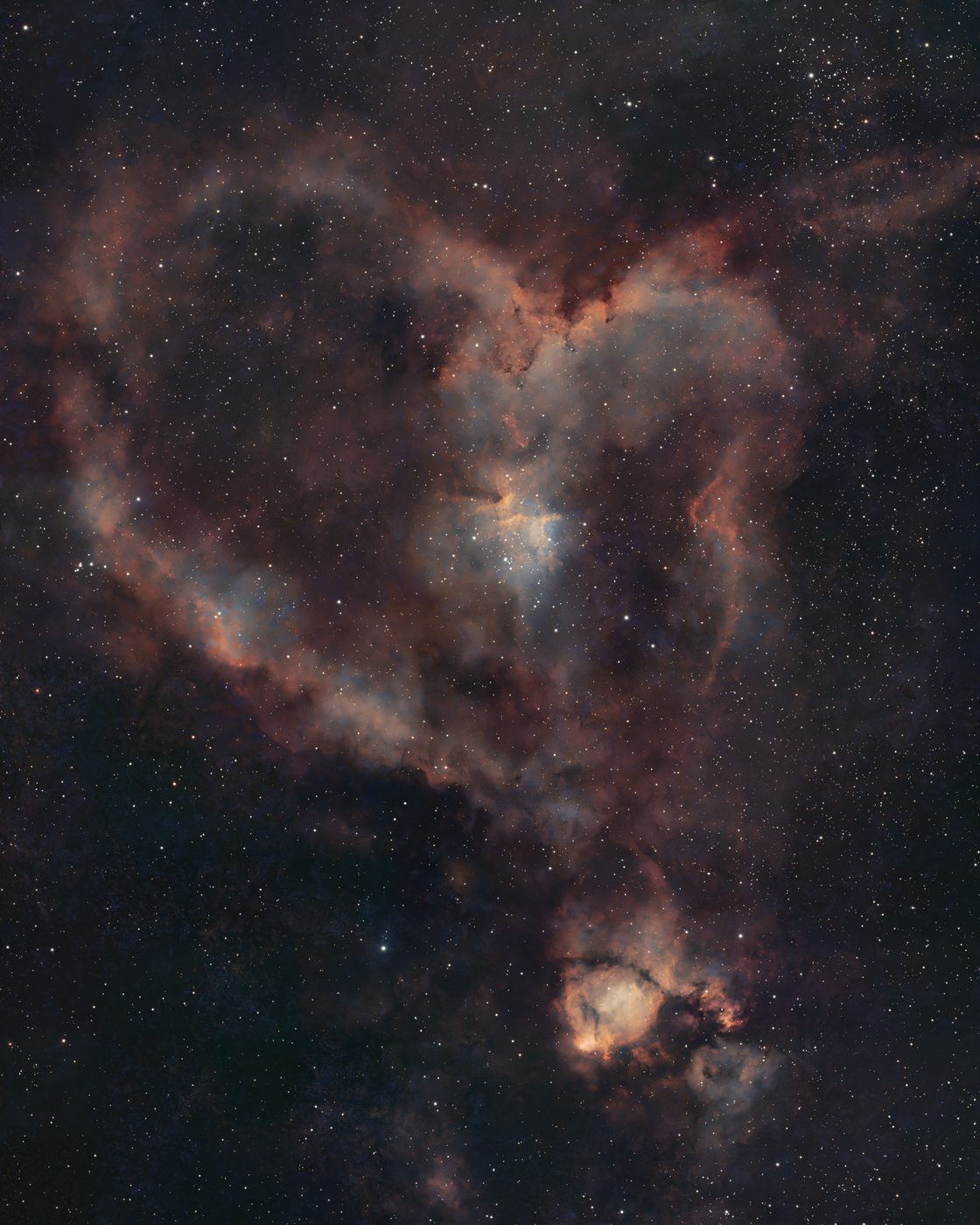
IC 1805 — Heart Nebula

331 × 10 s · 55 min · ZWO Seestar S30 Pro · drizzled 2× · 4320 × 7680

The Heart Nebula in Cassiopeia, a large cloud of glowing hydrogen around the young star cluster at its centre. The whole heart fits inside the Seestar’s field, so there is room to crop and compose. This master is drizzled, which doubles its width and height and explains the 380 MB download.
Stacked master (380 MB) All 420 subframes (Google Drive)

M 16 — Eagle Nebula processed in Nocturne

M 16 — Eagle Nebula

92 × 20 s · 31 min · 1704 × 3640

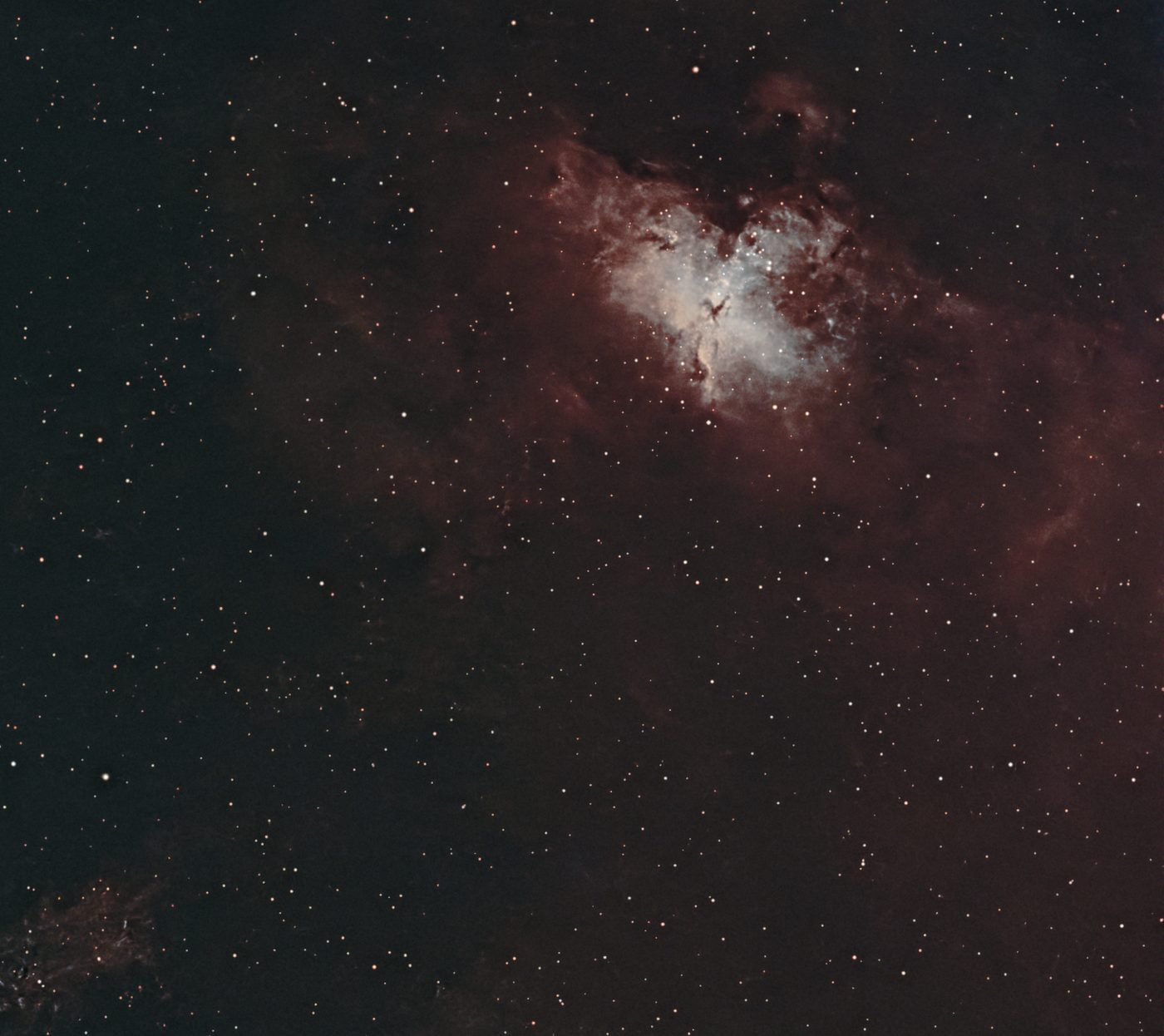
Point a Seestar at M17 and this is what comes back: the field is wide enough to hold both the Eagle Nebula (M16) and the Omega Nebula (M17), about two and a half degrees apart. The capture is filed under M17, where the telescope was pointed, while Nocturne’s plate solving names the field M16, the larger of the two. Two of the sky’s finest nebulae in one frame, and good data for trying Plate Solve. At 31 minutes it is also the shortest and softest set here, which makes it honest practice: this is what a short night gives you.

Stacked master (71 MB) All 92 subframes (Google Drive)

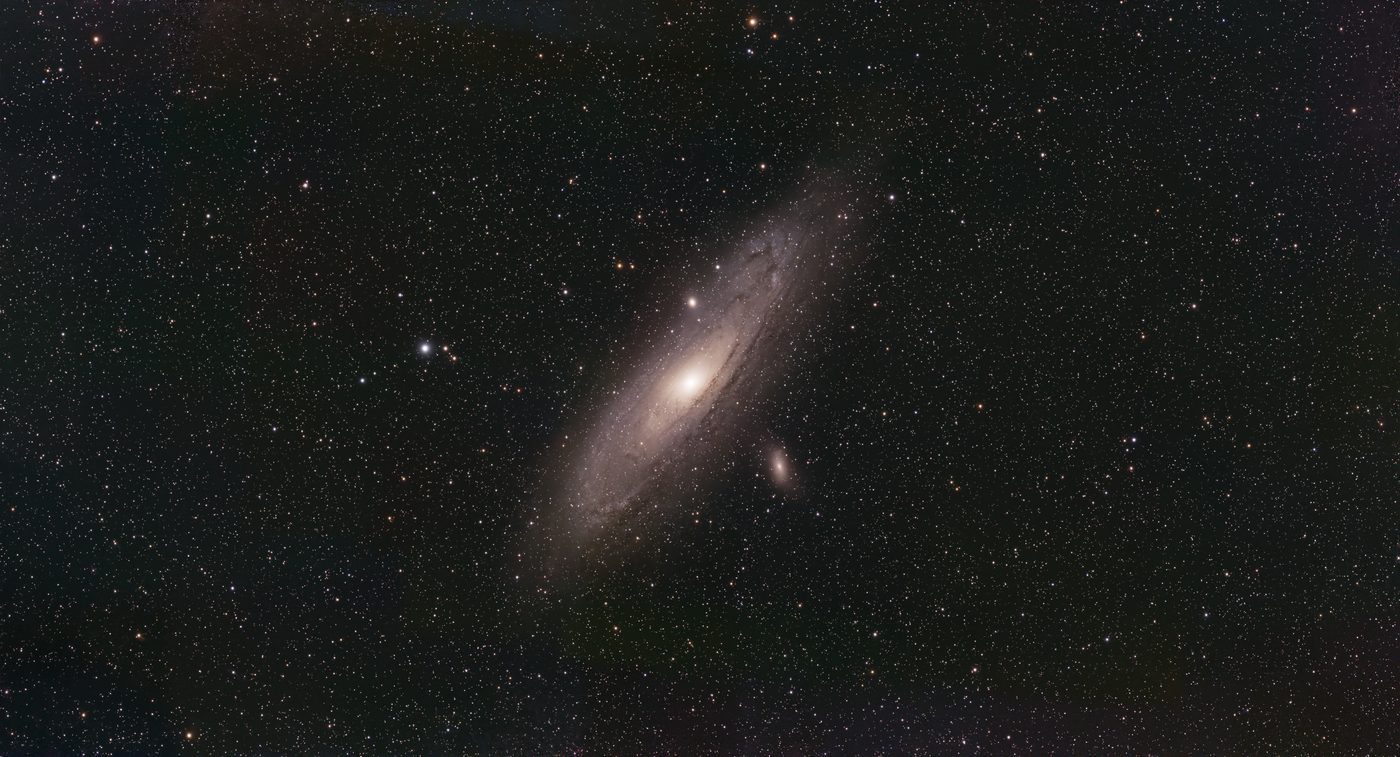
M 31 — Andromeda Galaxy mosaic processed in Nocturne

M 31 — Andromeda Galaxy mosaic

302 × 10 s · 50 min · ZWO Seestar S30 Pro · 8548 × 4618

The Andromeda Galaxy, the nearest large galaxy to our own, with its two small companion galaxies beside it. It is wider than one Seestar frame, so this master is a mosaic of several panels stacked into one image, which is why it is the largest file here. Galaxies are good practice for restraint: the aim is to show the dust lanes in the disc without burning out the bright core.

Stacked master (452 MB) All 302 subframes (Google Drive)

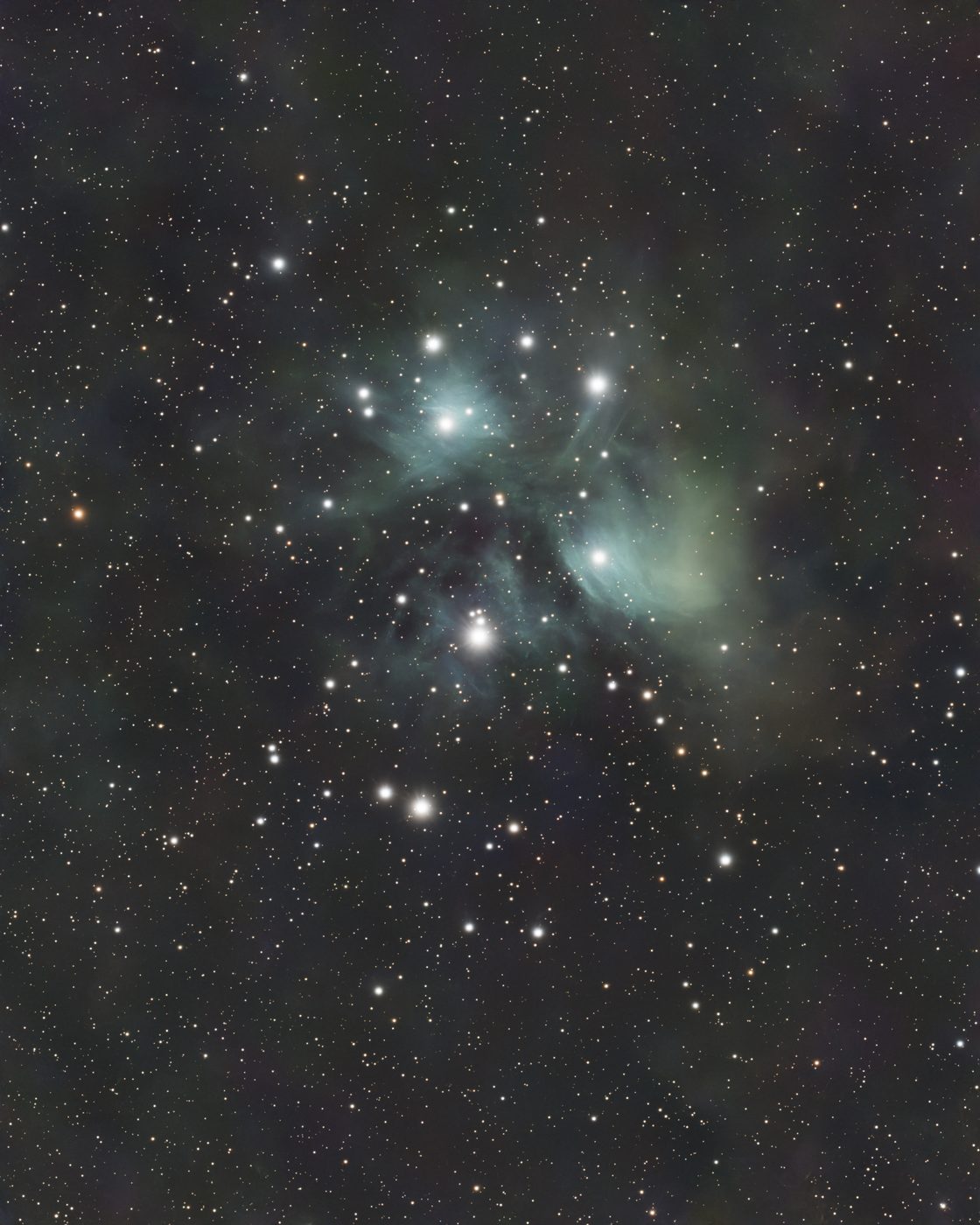
M 45 — Pleiades processed in Nocturne

M 45 — Pleiades

300 × 10 s · 50 min · ZWO Seestar S30 Pro · 2160 × 3840

The Pleiades, a young star cluster in Taurus, wrapped in blue dust that its brightest stars light up. Unlike the other targets here it is a reflection nebula, so the colour comes from starlight scattered by dust rather than from glowing gas. The bright stars make it good practice for keeping star size and colour under control while you bring out the faint dust around them.

Stacked master (95 MB) All 300 subframes (Google Drive)

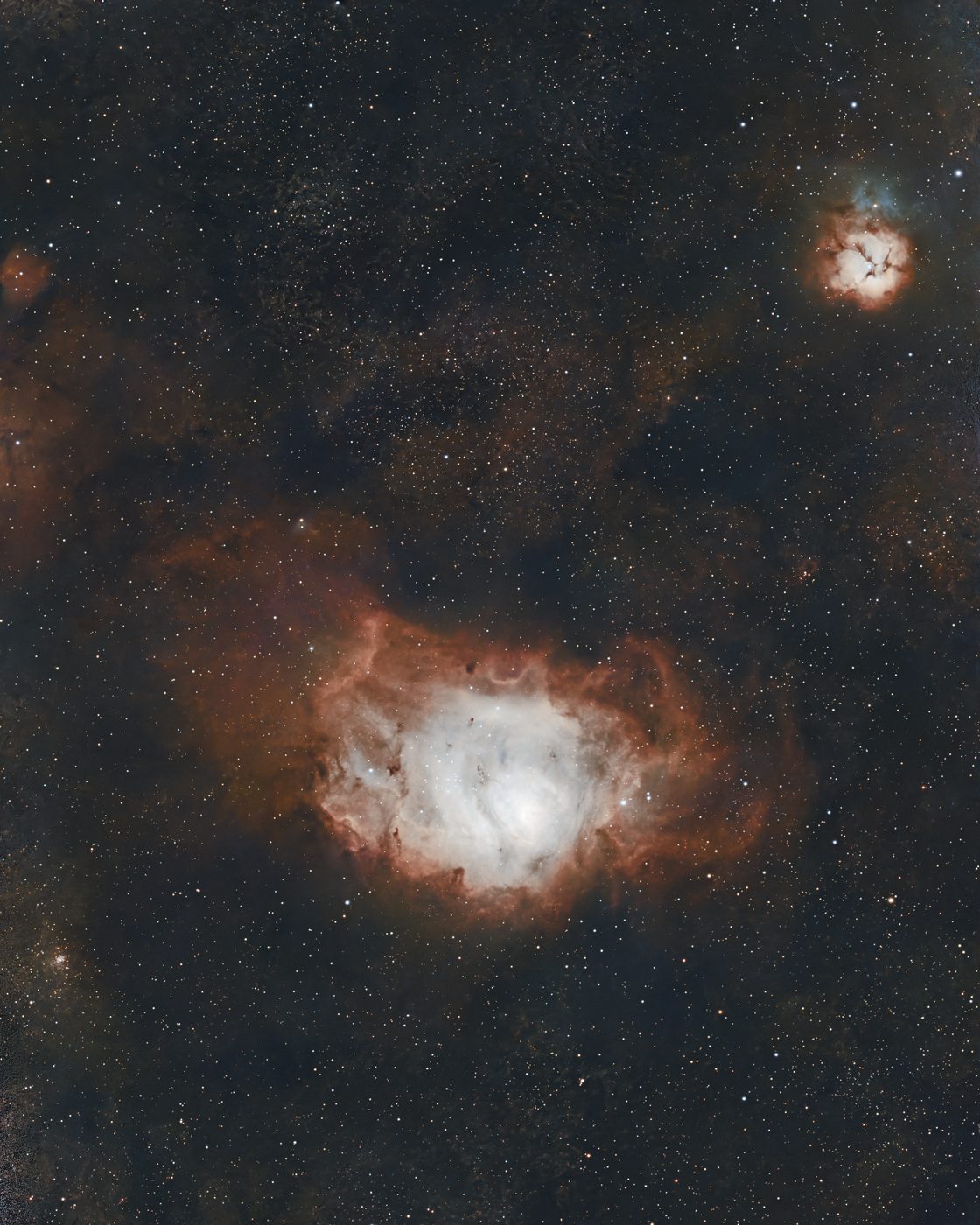
M 8 — Lagoon Nebula processed in Nocturne

M 8 — Lagoon Nebula

460 × 10 s · 1 h 17 m · ZWO Seestar S30 Pro · 2180 × 3683

The Lagoon Nebula in Sagittarius, with the smaller Trifid Nebula (M 20) in the same frame. At 1 h 17 m it is the longest stack here, which gives clean data with plenty of room to push. This is also the file Start here walks through step by step, so you can compare your result at every stage.

Stacked master (92 MB) All 460 subframes (Google Drive)

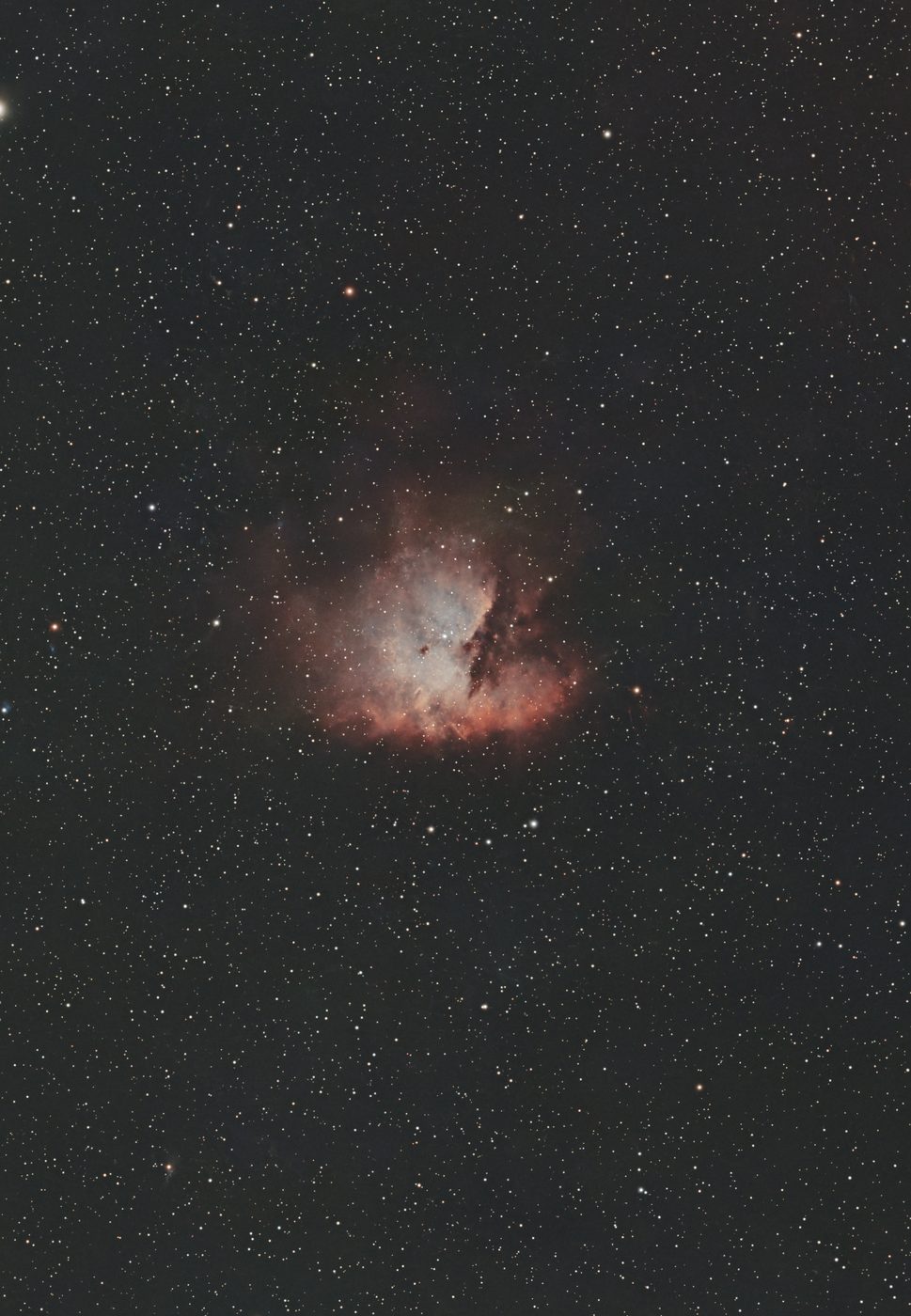
NGC 281 — Pacman Nebula processed in Nocturne

NGC 281 — Pacman Nebula

91 × 20 s · 30 min · ZWO Seestar S30 Pro · 2160 × 3840

The Pacman Nebula in Cassiopeia, a glowing cloud with a dark lane of dust that gives it its name. It sits small in the middle of a wide field of stars, so it is good practice for cropping and for bringing out a compact nebula without swelling the stars around it. At 30 minutes the data is short, and noise reduction matters here.

Stacked master (95 MB) All 91 subframes (Google Drive)

NGC 7000 — North America Nebula processed in Nocturne

NGC 7000 — North America Nebula

163 × 20 s · 54 min · ZWO Seestar S30 Pro · 2160 × 3840

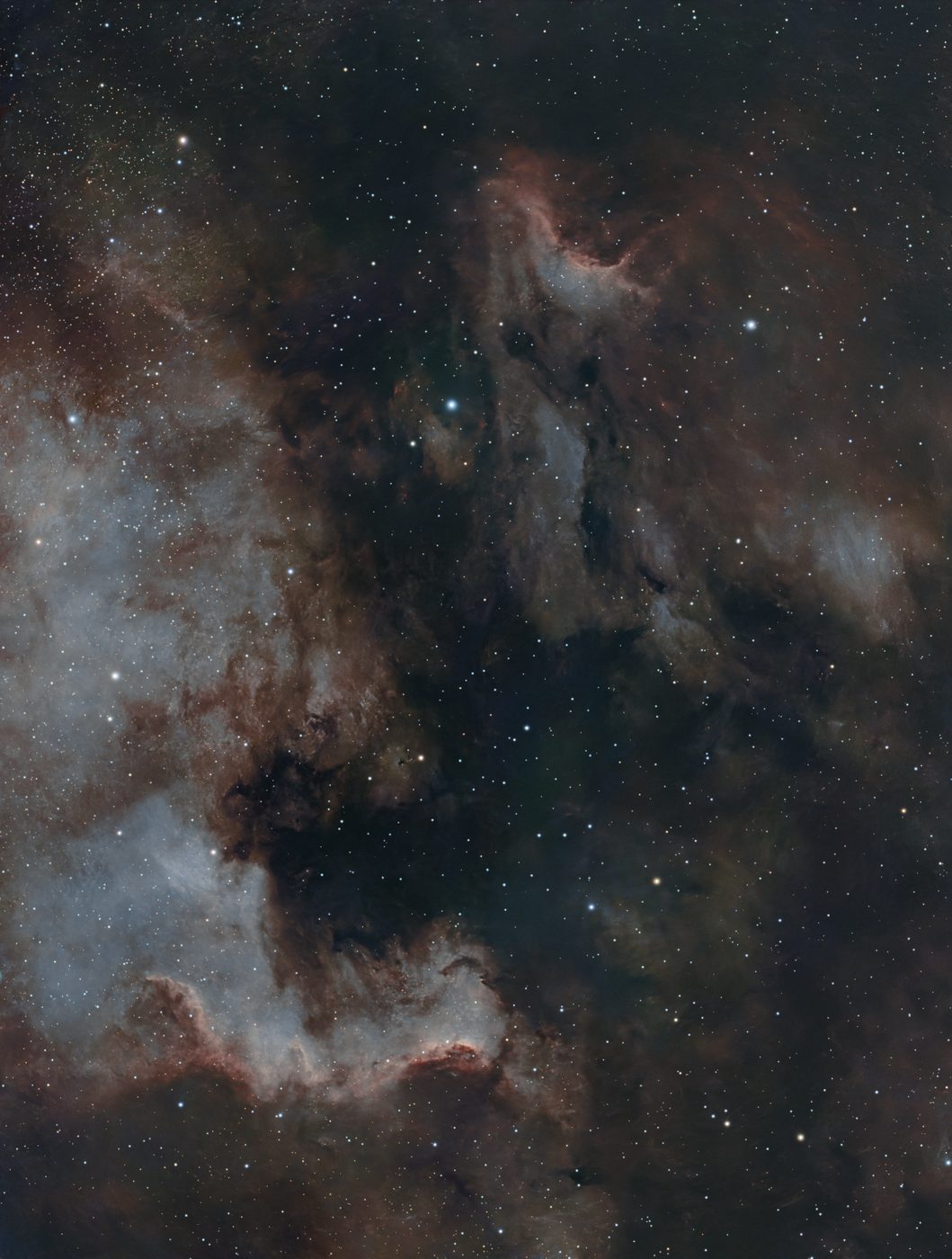
The North America Nebula in Cygnus, with the Pelican Nebula beside it across a dark lane of dust. Both are large clouds of glowing hydrogen that fill the whole frame. That makes it good practice for colour balance across a busy field, and for keeping the dust lanes dark while the clouds get brighter.

Stacked master (95 MB) All 163 subframes (Google Drive)

Sh2-108 — Sadr region processed in Nocturne

Sh2-108 — Sadr region

238 × 10 s · 40 min · ZWO Seestar S30 Pro · 2160 × 3840

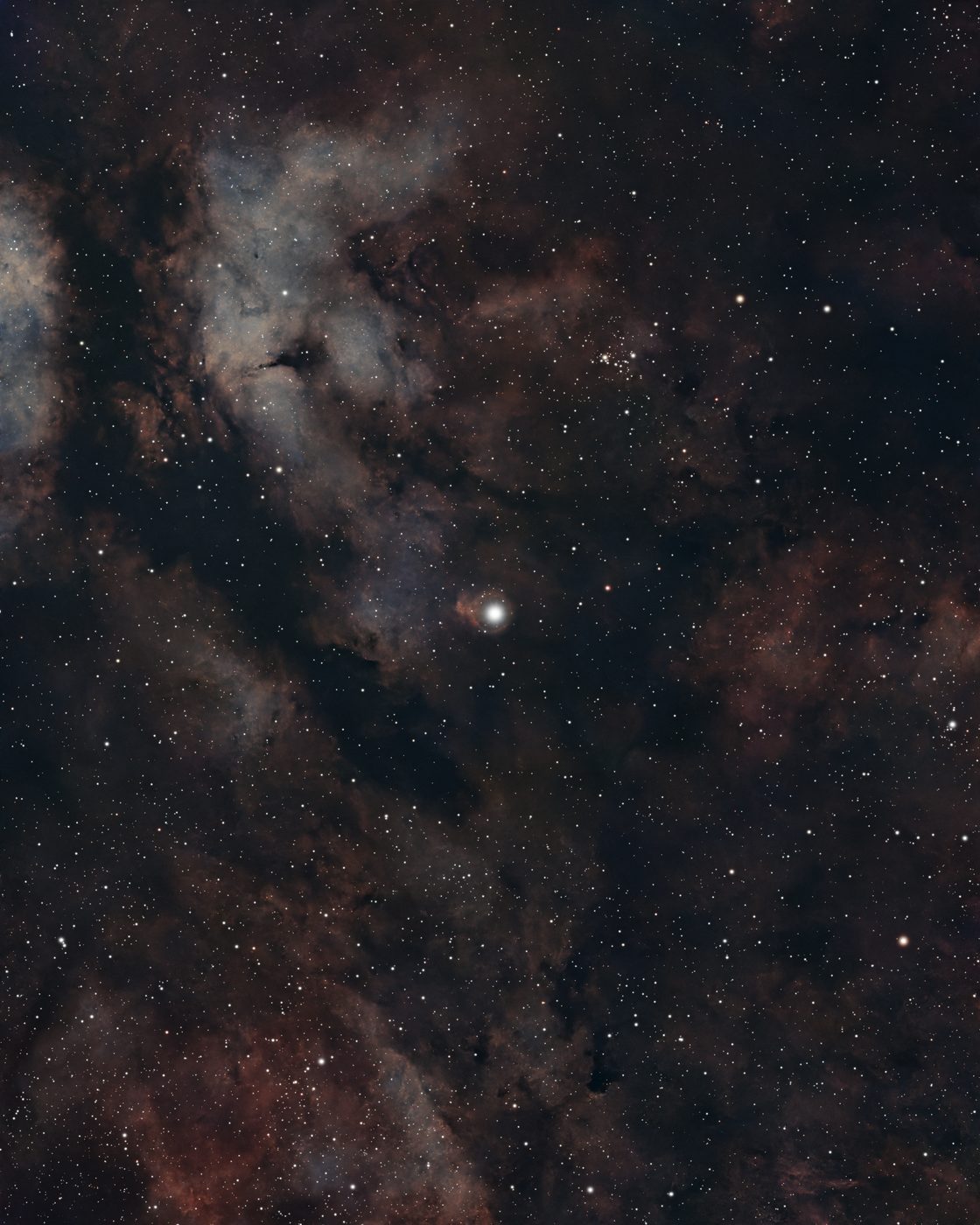
A wide field around Sadr, the bright star at the centre of the Northern Cross in Cygnus. Faint hydrogen clouds and dark dust lanes run through the whole frame, with no single bright object to build the picture around. That makes it good practice for faint nebulosity, where the skill is bringing out the clouds without lifting the background noise with them.

Stacked master (95 MB) All 253 subframes (Google Drive)

What to do with them

If you have never processed astronomical data before, start with how to process Seestar FITS files. It explains why the file opens almost black, what each step is for, and what going too far looks like. The guide is the shorter tour if you would rather get going.

You will need Nocturne itself, which is free and open source.

Download Nocturne Read the guide first

Clear nights are rare and processing is a skill. These are here so you can practise the second while you wait for the first.

Why the sample data exists